Modern Backyard Shade Ideas for 2026
Table of Contents
- Why Backyard Shade Matters
- Best Materials for Outdoor Shade Structures
- Retractable Awnings: Flexibility Meets Style
- Shade Sails and Canopies: Minimalist Modern Design
- Pergolas and Gazebos: Defining Your Outdoor Room
- How to Choose Patio Shade for Sun Exposure
- Integrated Fire and Shade Backyard Layouts
- Small Patio Shade Solutions That Work
- Frequently Asked Questions
Last Updated: September 3, 2026
Why Backyard Shade Matters
Your backyard is now the room where life happens, where conversations last past sunset and gatherings feel inviting. But none of that works without proper shade. Modern backyard shade ideas have evolved far beyond the basic umbrella, transforming how we think about outdoor living spaces.
The difference between a backyard that gets used and one that sits empty often comes down to comfort. Direct sun exposure makes outdoor spaces unusable for hours at a time. The right shade structure doesn't just solve a practical problem, it changes how families interact with their outdoor environment, offering opportunities to linger longer.
Modern approaches integrate shade as a core design element from the start. Whether you're working with a sprawling backyard or a compact patio, the materials, styles, and technologies available now offer real flexibility.
Best Materials for Outdoor Shade Structures
Material selection determines durability and extends beyond just looks to include performance, environmental impact, and climate resilience. Many homeowners choose based on appearance alone, ignoring how materials perform over the seasons and extreme weather.
Weather-Resistant Fabrics and UV Performance
Modern outdoor fabrics resist UV damage, mold, and mildew while maintaining their color. Acrylic-polyester blends offer 500+ hours of UV resistance, while laminated or solution-dyed fabrics outperform surface-dyed options by 30-50% in fade resistance over five years. Look for UPF 50+ ratings, which block 98% of harmful rays according to (the FDA).
Sustainable and Eco-Material Options
Recycled polyester fabrics deliver identical performance to virgin polyester while reducing landfill waste. FSC-certified timber and composite materials made from recycled wood fibers and plastic offer environmental accountability. Aluminum is infinitely recyclable and environmentally superior over a 20+ year lifespan compared to wood requiring regular replacement or chemical treatment.
Aluminum and Metal Frames
Aluminum frames resist rust, require minimal maintenance, and remain lightweight. Powder-coated finishes extend frame life to 15-20 years in coastal environments. For high-wind zones, reinforced aluminum with thicker wall gauges (2.0-2.5mm) ensures durability.
Wood Elements and Hybrid Approaches
Wood elements add warmth but require sealing every 2-3 years. Composite materials, engineered lumber made from wood fibers and recycled plastic, deliver the look without maintenance, resist rot, and last 25+ years. This hybrid approach has become standard for high-end pergolas and gazebos.
Retractable Awnings: Flexibility Meets Style
Retractable awnings provide control that fixed structures cannot match, extending when the sun is intense and retracting for full sun exposure. This flexibility makes them ideal for multipurpose spaces.
Manual crank systems offer reliability for smaller awnings. Motorized versions with integrated wind sensors automatically retract in gusty conditions and can be programmed on a schedule.
Acrylic blends provide better fade resistance than pure polyester, while laminated fabrics offer superior water repellency.
Installation location is critical. Retractable awnings require solid wall mounting, so south or west-facing walls work best. The structure needs to withstand wind loads and the weight of rain-saturated fabric, which is why professional assessment matters before purchasing.
Shade Sails and Canopies: Minimalist Modern Design
Shade sails represent a contemporary aesthetic shift toward clean lines and architectural simplicity, creating geometric patterns while providing functional UV protection.
Shade sails feel light and open without blocking views.
Installation requires solid structures, posts, walls, or trees to tension the fabric correctly. Orientation matters, a south-facing sail provides maximum afternoon protection, while diagonal configurations create interesting shadow patterns.
Shade sails work particularly well for small patios and poolside areas where you want defined shade without enclosing the space completely. They're also easier to remove seasonally than permanent structures, making them ideal if you anticipate moving or want to adjust your outdoor layout.
Pergolas and Gazebos: Defining Your Outdoor Room
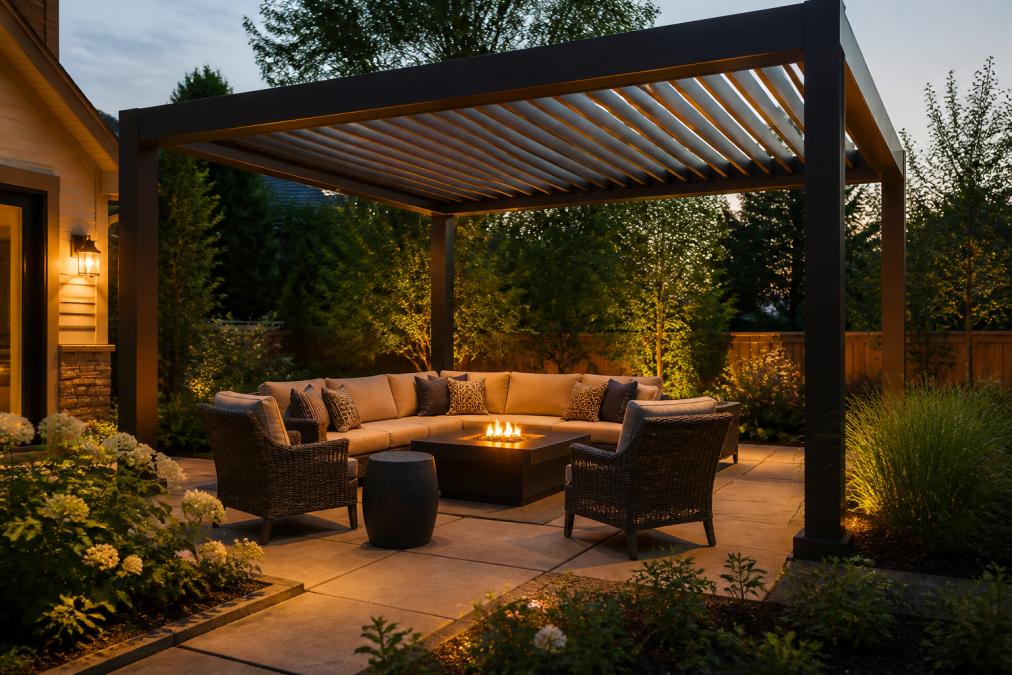
Pergolas and gazebos define space and create a sense of enclosure that transforms a backyard into an actual outdoor room.
A pergola provides partial shade through its open-slat roof design, ideal for filtered light. Modern pergolas often feature adjustable louvers that rotate to control shade density. And newer designs have motor controlled slats that can be adjusted at the push of a button.
Gazebos offer complete coverage and create a distinct gathering space.
The key difference: pergolas feel open and connected to the surrounding landscape, while gazebos feel like an actual room with defined boundaries. Choose based on how you want the space to function and feel.
How to Choose Patio Shade for Sun Exposure
Sun exposure patterns determine which shade solution works for your space, but also account for wind exposure, local climate patterns, zoning restrictions, and smart-home integration options.
Mapping Sun Exposure and Seasonal Variation
Morning sun (east-facing) feels gentler; afternoon sun (west-facing) is intense. The sun's angle changes dramatically with seasons, in summer it reaches a high angle almost overhead at noon, while in winter it drops to a much lower angle near the horizon. Measure your actual sun exposure over several days at different times of year, noting where shadows fall at 10 a.m., noon, 3 p.m., and 5 p.m. If your patio gets direct afternoon sun for four hours, you need reliable coverage during that window.
Wind Resilience and Climate Considerations
Shade sails and retractable awnings are vulnerable to sustained winds above 25 mph (weather.gov). If your location experiences regular winds above 20 mph, fixed pergolas or gazebos with wind-rated engineering are more reliable. Consult local wind speed data from the National Weather Service; areas with average wind speeds above 15 mph require structures rated for 90+ mph design specifications. In snow-prone regions, pergolas need reinforced posts and beams rated for 40+ pounds per square foot of roof area. Always check your local zoning laws for specifics.
Permitting, HOA, and Zoning Requirements
Permanent shade structures often require building permits and HOA approval. Pergolas, gazebos, and attached awnings typically trigger permitting if they exceed 200 square feet or attach to your home. Contact your local building department and HOA before purchasing; permit costs typically range from $50-$300. Retractable awnings and shade sails often bypass permitting entirely, a practical advantage for renters or those in restrictive HOA communities.
Smart-Home Integration and Motorized Control
Smart retractable awnings with integrated wind sensors automatically retract when gusts exceed preset thresholds (typically 20-25 mph). Solar-powered motorized systems eliminate wiring and operate independently. App-controlled systems allow you to adjust shade density from your phone, preset schedules, or integrate with weather data. These systems cost 30-50% more than manual alternatives but deliver convenience and protection for frequent users. Compatibility with major smart-home platforms (Amazon Alexa, Google Home) is increasingly standard.
Layered Shade Strategy
Shade density affects the space, complete shade creates a cool refuge but can feel cave-like, while dappled shade feels more open while reducing UV exposure and heat by 50-70%. The best approach integrates multiple solutions: a permanent structure like a pergola provides baseline shade, while a retractable awning adds flexibility for peak sun hours.
Integrated Fire and Shade Backyard Layouts
Modern outdoor living combines shade and warmth. A well-designed backyard includes both sun protection and reasons to stay outside after sunset.
Place shade structures to cool the primary seating area during peak sun hours, then position fire features nearby for evening use. A pergola over the dining area keeps afternoon meals comfortable, while a fire pit positioned ten feet away becomes the evening gathering point.
Safety requires thoughtful spacing. Fire features need clearance from shade structures to prevent fabric damage or heat buildup. Check local fire codes for minimum distances and clearance requirements. Most jurisdictions require at least 10 feet between fire pits and overhead structures.
Small Patio Shade Solutions That Work
Compact spaces demand efficient solutions that provide functional shade without overwhelming limited space.
Cantilever umbrellas mount to the side, leaving the seating area unobstructed.
Outdoor roller shades mount to pergolas or covered porches, providing glare control without taking up floor space.
Outdoor curtains add softness and adjustable privacy.
Layer solutions: a compact shade sail overhead, combined with a portable umbrella for peak sun hours and curtains for privacy, delivers maximum functionality without overwhelming limited space.
Creating a backyard that actually draws you outside requires more than furniture. It requires thoughtful shade solutions that work with your space, not against it. Patio Guild specializes in intentionally designed shade structures and outdoor furniture built from weather-tested materials, pieces engineered to invite lingering conversations and create genuine outdoor destinations. Explore our collection of pergolas, and integrated shade-and-fire layouts designed specifically for backyards that matter. Shop now and transform how your family uses their outdoor space.
Frequently Asked Questions
What are the most durable materials for modern backyard shade structures?
Weather-resistant fabrics like solution-dyed acrylic and high-density polyethylene block UV rays while resisting fading and mildew. Aluminum frames with powder-coated finishes resist rust and corrosion. For permanent structures, powder-coated steel and aluminum provide superior durability. Look for shade materials rated for your local climate and tested for season-after-season performance, not just one year of use.
How do I choose patio shade for sun exposure in my backyard?
Assess your sun's path: east-facing patios need morning shade, south-facing need all-day coverage, and west-facing need afternoon protection. Retractable awnings work well for patios where you want flexible control. Shade sails and pergolas suit open yards where you want permanent structures. For covered porches, outdoor roller shades add precision glare control. Consider shade density (how much light passes through) based on whether you want dappled light or complete blockage.
Are motorized outdoor shades worth the investment in 2026?
Motorized systems offer convenience and precision control, especially for large structures or difficult-to-reach areas. Automated retraction triggered by wind sensors protects your investment during storms. However, manual systems cost significantly less and work reliably for smaller patios. If you entertain frequently and want hands-free adjustment, motorized options justify the cost. For budget-conscious homeowners, manual systems deliver the same shade performance at lower upfront expense.
What are the best eco-friendly shade options for backyards?
Shade sails made from recycled polyester or breathable, solution-dyed fabrics reduce chemical runoff and last longer, cutting replacement waste. Natural pergolas with climbing vines or living roofs provide organic cooling and support pollinators. Modular structures allow you to expand or reconfigure without waste. Prioritize shade solutions with UV-blocking fabrics that don't require chemical treatments, and choose manufacturers committed to durable, long-lasting materials that reduce the need for frequent replacement.