Buy Weather Tested Fire Pits Online: 2026 Guide
Table of Contents
- Why Weather Tested Fire Pits Matter for Your Patio
- Quick Comparison: Our Top Weather Tested Fire Pits
- How We Evaluate Weather Tested Fire Pits
- Best Smokeless Fire Pits 2026: Features That Matter
- Gas vs Wood Burning Fire Pits: Which to Choose
- Top Picks to Buy Weather Tested Fire Pits Online
- How to Maintain Outdoor Fire Pits for Year-Round Use
- Fire Code Compliance and Safety for Your Backyard
- Conclusion: Make Your Backyard a Gathering Place
- Frequently Asked Questions
Last Updated: September 9, 2026
Why Weather Tested Fire Pits Matter for Your Patio
A fire pit that rusts after one winter or fades after a single summer isn't a gathering place, it's a disappointment. That's why the phrase weather tested fire pits matters more than a marketing tagline: it separates pieces engineered for years of outdoor exposure from those built to fail quietly. At Patio Guild, we offer fire features with materials chosen to resist rain, UV rays, and temperature swings.

The real cost of a cheap fire pit isn't the purchase price. It's the replacement cycle, the rust stains on your concrete, and the evening you planned around a flame that won't light. Weather tested fire pits use powder-coated steel, all-weather wicker, and fade-resistant finishes that keep performing long after budget alternatives have been relegated to the curb.
Quick Comparison: Our Top Weather Tested Fire Pits
Model |
Fuel Type |
Heat Output |
Price |
Best For |
|---|---|---|---|---|
7-Piece Patio Set |
Propane |
50,000 BTU |
$1,339.99 |
Full patio makeovers |
43 In. Propane Table |
Propane |
50,000 BTU |
$591.37 |
Dining-to-fire conversion |
Fog Concrete 42" Round |
Propane |
60,000 BTU |
$5,801.72 |
Large gatherings up to 900 sq ft |
43 In. Stone Table |
Propane |
50,000 BTU |
$536.14 |
Budget-conscious buyers |
Bronze Steel Fire Bowl |
Wood |
N/A |
$499.99 |
Compact patios and balconies |
How We Evaluate Weather Tested Fire Pits
Material durability means examining the frame construction, finish quality, and whether the manufacturer specifies weather-resistant properties like powder coating or rust-proof steel. Heat performance covers BTU output, flame adjustability, and whether the unit warms a usable area.

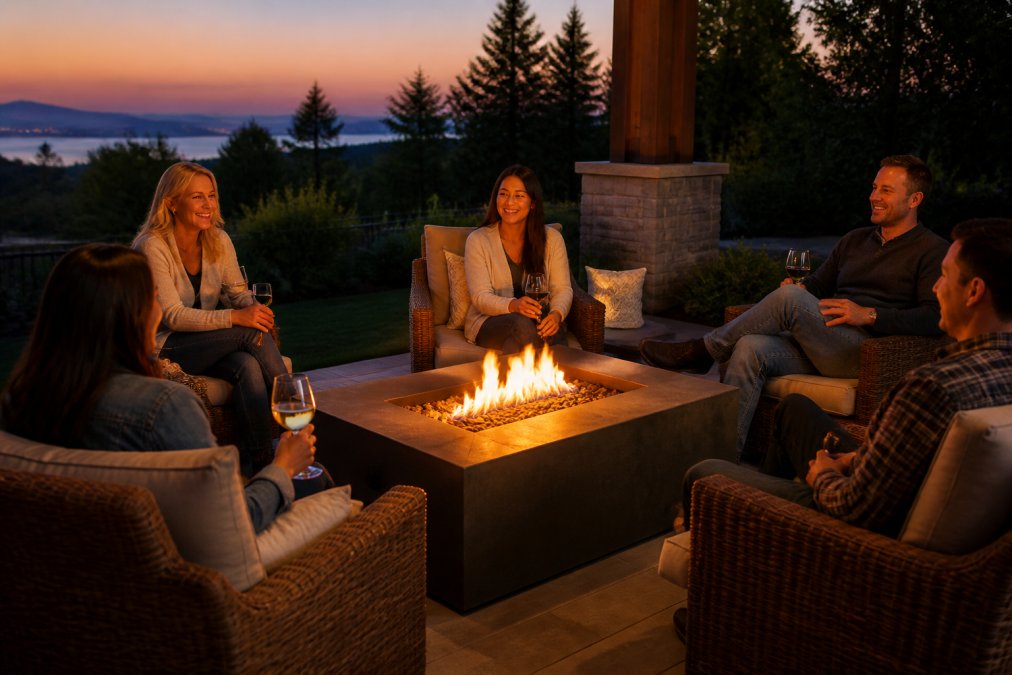
Design integration matters more than most reviews acknowledge. A fire pit that clashes with your existing furniture or overwhelms a compact patio fails its primary purpose: making your outdoor space more inviting. Units with removable lids, included covers, and accessible ash or tank compartments are easier to maintain and more likely to stay in use.
Best Smokeless Fire Pits 2026: Features That Matter
Smokeless technology is the defining upgrade in modern fire pit design, working through secondary combustion. A double-walled design draws oxygen through vents, preheating the air and reigniting smoke particles before they reach your face. The result is a cleaner burn with significantly less smoke.
When evaluating smokeless fire pit options, look beyond the smokeless claim itself. Airflow design determines how well secondary combustion works, and cheap imitations often cut corners on vent placement and inner wall construction. A genuine smokeless pit also burns hotter and more efficiently, extending burn time per log or propane tank.
Gas vs Wood Burning Fire Pits: Which to Choose
The gas vs wood burning fire pits decision comes down to how you plan to use the space. Gas models offer instant ignition, adjustable flame height, and zero smoke or ash, ideal if you entertain frequently, want a fire feature that doubles as a dining table, or live somewhere with strict burn regulations. Wood models deliver the classic campfire experience: the crackle, the scent, and the ritual of building a fire.

Propane fire pits win on convenience, but they require tank management. A standard 20-pound tank typically provides 8 to 12 hours of burn time at medium flame, depending on your BTU rating. Natural gas conversion eliminates tank swaps but requires a permanent gas line installation best left to a licensed professional.
Wood burning fire pits demand more attention, you'll manage logs, sparks, and ash removal after every use. The tradeoff is authenticity and typically a lower upfront cost. The Bronze Steel Fire Bowl at $499.99 delivers that experience in a compact, elevated design that suits smaller patios.
Top Picks to Buy Weather Tested Fire Pits Online
Shopping for weather tested fire pits online requires reading between the lines of product descriptions. Look for specific materials like powder-coated steel, all-weather PE wicker, and rust-proof finishes. Vague claims like "weather-resistant" without specifying the material or treatment should raise questions. The models below all specify their construction clearly.
7-Piece Patio Set with Fire Pit Table
This is the complete solution for anyone who wants a cohesive outdoor living space rather than a collection of mismatched pieces. The 7-piece rattan set pairs deep, cushioned seating with a built-in 50,000 BTU propane fire pit table. The powder-coated steel frame and hand-woven all-weather PE wicker resist rain, sun, and wind without fading or warping.
Where this set shines is the details. The two swivel chairs rotate a full 360 degrees on a stable iron base, and the 4-inch high-density cushions are wrapped in UV-resistant olefin fabric that repels water and stains. The fire pit table doubles as a coffee table with a removable lid, and the ottomans pull double duty as footrests or extra seating. It's the most complete option for turning a backyard into a true gathering destination.
43 In. Propane Fire Pit Table with Glass Wind Guard
If you already have seating and just need the centerpiece, this 43-inch propane fire pit table delivers the most value per dollar at $591.37. The rust-proof paint steel frame and all-weather PE wicker construction hold up to the elements, while the glass wind guard keeps the flame steady on breezy evenings. The included cover converts it into a standard dining or coffee table when the fire isn't lit.
The tradeoff is that this is a fire feature, not a full seating solution, you'll need to supply your own chairs. The 50,000 BTU output and electronic ignition make it as easy to operate as flipping a switch, and the rust-proof construction addresses the most common failure point in outdoor fire pits.
Fog Concrete 42" Round Fire Pit
For serious entertaining, the Fog Concrete Round Fire Pit is a statement piece that actually performs. Rated to warm up to 900 square feet, this 60,000 BTU propane unit is a genuine heat source, not just a decorative flame. The round design provides 360-degree viewing, and the fade-resistant concrete exterior keeps its light gray finish looking new season after season.
This is the premium option at $5,801.72, and it's priced accordingly. The concrete construction is heavier and less portable than steel or wicker alternatives, so you'll want to commit to a location. This is a piece you buy because you plan to keep it for a decade, not a season.
How to Maintain Outdoor Fire Pits for Year-Round Use
Most reviews tell you how a fire pit performs on day one. Few tell you how it holds up after 12, 18, or 24 months of rain, snow, and UV exposure. That long-term weather resistance is where cheap units fail and where proper maintenance separates a decade-long centerpiece from a two-season disappointment.
The 12-Month Weathering Timeline
In the first year, the most common failure points emerge. Powder-coated steel that was not properly pre-treated will start showing rust pinpricks, especially along sharp edges. All-weather PE wicker, if truly solution-dyed, will hold its color, but cheaper poly rattan can fade noticeably within a single summer of direct afternoon sun. Concrete and stone composite units may develop a patina of moss or mineral staining in damp climates.
By month 18, the consequences of skipped maintenance become visible. Rust that started as pinpricks begins to flake, creating new bare spots that accelerate corrosion. Propane burner assemblies left exposed without a cover accumulate spider webs and debris that can cause uneven flame patterns or delayed ignition. Glass wind guards develop a hazy mineral film from hard water and rain that does not come off with standard glass cleaner.
The Seasonal Maintenance Protocol
A simple four-season routine prevents nearly all of these issues. In spring, before your first use, inspect the entire unit. For propane models, check the burner ports with a flashlight and clear blockages with a compressed air canister. Test the ignition system and inspect the gas hose for cracks. Wipe down all exterior surfaces with a mild dish soap solution and a soft cloth, then rinse thoroughly.
In summer, the primary enemy is UV radiation. If your unit sits in direct sun for more than six hours a day, consider a UV-protectant spray designed for outdoor plastics and wicker. For powder-coated steel, a twice-yearly application of automotive paste wax creates a sacrificial layer that absorbs UV damage and makes water bead off rather than pool.
In fall, before you button up for winter, do a deep clean. For wood burning pits, remove all ash down to bare metal, ash is hygroscopic, and a wet ash bed is the fastest route to interior rust. Scrub the interior with a wire brush, then apply a high-temperature paint designed for fireplace interiors if you see bare metal. For gas units, remove the lava rock or glass media and rinse it thoroughly to remove soot and dust.
In winter, storage is everything. If your pit is portable, move it under a covered patio or into a shed. If it is permanent, invest in a high-quality, fitted cover that breathes, a non-breathable cover traps condensation underneath. Cushions should always come inside or go into a dry storage bin. Owners who get five-plus years from their pits treat the cover as a non-negotiable accessory.
The 24-Month Deep Inspection
At the two-year mark, do a more thorough inspection. Check all welds and joints for signs of separation or corrosion. On propane units, remove the burner assembly and inspect the Venturi tubes for rust or blockage. On wood burning units, examine the fire bowl or liner for burn-through, especially if you regularly burn softwoods. If you see hairline cracks in concrete or stone composite, seal them immediately with a flexible masonry sealer before water gets in and freezes.
This level of attention is not about being obsessive. It is about understanding that a weather tested fire pit is a system that interacts with your specific climate. A unit in Phoenix faces UV stress but little moisture; a unit in Seattle faces constant dampness but mild temperatures; a unit in Minneapolis faces freeze-thaw cycles that stress welds and concrete. Tailor your routine to your local conditions, and your pit will still be the centerpiece of your patio when trendier models have already been replaced.
Fire Code Compliance and Safety for Your Backyard
The single most common reason a fire pit gets removed or becomes a legal headache is not a defect in the product, it is a failure to understand the local regulatory landscape before purchase. Generic safety advice tells you to keep a fire extinguisher nearby, but your specific address may have rules that make your dream fire pit illegal before you ever light it.
The Regulatory Hierarchy
Fire pit rules in the United States come from four distinct layers, and you are subject to all of them simultaneously. State law sets baseline requirements for open burning and may impose seasonal restrictions. County or municipal ordinance is where most specific rules live, including setback distances, permitted fuel types, and permit requirements. Your homeowners association can impose stricter rules, and your insurance policy may have its own requirements for coverage to remain valid.
What the Model Codes Actually Say
The International Fire Code and the National Fire Protection Association standards form the basis for most local regulations. The most common requirements derived from these codes include a minimum clearance of 10 feet from any structure, property line, or combustible material, and a requirement that the fire pit sit on a non-combustible surface such as concrete, stone, or gravel. Wood burning units typically must have a spark screen or mesh cover. Some jurisdictions also cap the size of the fire itself, often limiting it to a 3-foot diameter or requiring that flames stay under 2 feet high.
The Fuel Type Distinction
A critical distinction that most buyers miss is that regulations treat wood burning and gas units very differently. Wood burning fire pits are classified as open burning in most jurisdictions, subject to the strictest rules. Many municipalities ban wood burning entirely during summer months or declared burn bans, and some western cities ban it outright within city limits due to air quality concerns. Propane and natural gas units are typically classified as appliances rather than open fires, placing them under more permissive rules. However, some jurisdictions still require a permit for any permanently installed gas line, and others cap the BTU output of residential units.
How to Check Your Local Rules
The most reliable method is a direct call to your local fire department's non-emergency line or your city's building department. Ask whether fire pits are permitted in your zone, what setbacks apply to your property, and whether a permit is required for your specific fuel type. Many fire departments have a prevention officer whose job includes answering these questions. You can also check your city or county website for the municipal code, searching for terms like "open burning," "recreational fire," or "portable outdoor fire appliances."
If you belong to an HOA, review your covenants, conditions, and restrictions before purchasing. HOAs frequently ban wood burning pits entirely, require that gas units be screened from street view, or mandate minimum distances from neighboring units that exceed local code. Violating them can result in fines or forced removal.
The Insurance Angle
Most standard homeowners insurance policies cover fire pits as part of your property, but there are exceptions. If your pit is permanently installed, it may be considered a structure requiring additional coverage. Some policies exclude damage caused by open flame devices if the owner failed to comply with local codes. A quick call to your insurance agent before purchase can clarify any exclusions and whether your liability coverage extends to injuries at a gathering around your pit.
The Practical Safety Baseline
Beyond the legal requirements, the U.S. Consumer Product Safety Commission fire pit safety guidance recommends a set of practical measures that apply everywhere. Never leave a burning fire unattended, even for a minute. Keep a fire extinguisher rated for Class A and B fires within 10 feet of the pit. Maintain a clear radius of at least 3 feet around the unit free of furniture, cushions, and dry vegetation. On windy days, either use a wind guard or skip the fire entirely, as embers can travel surprising distances. And always have a method to fully extinguish the fire, whether that is a water source, a bucket of sand, or simply closing the gas valve and waiting for the unit to cool.
Conclusion: Make Your Backyard a Gathering Place
The difference between a backyard that gets used and one that gets ignored often comes down to a single element: a fire feature that draws people outside and keeps them there. Weather tested fire pits deliver that pull reliably, night after night, season after season, without the frustration of rust, fading, or failed ignition.
Every fire pit and furniture set we offer uses weather-tested materials like powder-coated steel, all-weather wicker, and fade-resistant finishes, designed for homeowners who want their outdoor space to be a destination rather than an afterthought. Whether you're starting with a compact fire bowl or building a complete conversation set, the goal is the same: a backyard that invites lingering conversations long after sunset.
Browse our fire pit collection and find the piece that turns your patio into the most loved room in your home.
Frequently Asked Questions
What materials make a fire pit weather-tested and durable?
Look for powder-coated steel frames, all-weather PE wicker, rust-resistant aluminum, and fade-resistant concrete. These materials resist rain, sun, and wind without warping or rusting. High-temperature finishes on steel fire bowls protect against heat damage. Cushions should use UV-resistant, water-repellent olefin fabric to stay vibrant season after season. Checking for these specific materials confirms a fire pit is built for long-term outdoor use.
How do I choose between gas and wood-burning weather-tested fire pits?
Gas fire pits offer instant ignition, adjustable flames, and cleaner burning with no smoke or ash, making them ideal for frequent, low-effort use. Wood-burning pits deliver a traditional campfire experience and crackling ambiance but require more setup and cleanup. Consider your priorities: gas suits entertaining and convenience, while wood appeals to those wanting an authentic fire. Both types are available in weather-tested models with durable, all-weather construction.
Are smokeless fire pits better for outdoor longevity?
Smokeless fire pits often feature advanced airflow design and secondary combustion, which burn fuel more completely. This efficiency can reduce creosote buildup and wear on the pit itself. Gas models, frequently marketed as smokeless, eliminate ash and soot entirely, keeping the unit cleaner and reducing maintenance that can extend its lifespan. Wood-burning smokeless designs also direct heat more efficiently, lessening thermal stress on the materials.
What maintenance is required for weather-tested outdoor fire features?
Cover your fire pit when not in use to protect it from rain and debris. Clean the burner and glass regularly for gas models, and remove ash after each use for wood-burning pits. Check for rust or loose connections before each season. Wipe down surfaces with a mild cleaner to prevent buildup. Proper maintenance keeps your fire pit functioning safely and looking its best for years.
How can I ensure a fire pit is safe for my deck or patio?
Always use a fire pit mat underneath to protect your deck from heat and sparks. Maintain a clearance of at least 10 feet from structures, and never place it under a low overhang. Check your local fire codes for specific requirements in your area. For gas pits, verify the burner is CSA-certified and connections are secure. Using a spark screen with wood-burning models adds an extra layer of safety.